


Pocket Prep Behavioral Health
4.5400.00 Reviews
App Specs
- Version
- 3.29.1
- Updated On
- License
- Free
- Downloads
- 50,000+
- Developer
- Pocket Prep, Inc.
- Categories
- Education
- Platform
- Android
Screenshots
 Analysis by AppCompare
If you’re choosing a study tool for a behavioral health exam, the first practical question is what you can try without committing money. Pocket Prep Behavioral Health is a free Education app from Pocket Prep, Inc., and it focuses on exam practice rather than serving as a general mental-health reference. The app is listed for Everyone, has a 4.5 average from around 2.8K ratings, and has been installed over 50K times. Those figures suggest that it has found an audience, but they don’t tell me whether its question style fits your exam or learning habits; that depends on how you use it.
What the free starting point tells you
The app is free to download, while in-app purchases range from $20.99 to $124.99 per item. I’d treat those as two separate decisions: you can explore the app without paying upfront, but the cost of any paid option should be weighed against the particular exam preparation you need. The range is wide enough that I wouldn’t assume every learner needs the same purchase, or that the free experience alone will cover every goal.
Before spending, I’d use the free access to check whether the app’s questions match the exam you’re actually taking and whether its explanations help you understand mistakes. That small trial matters more than simply liking the interface. A polished quiz is only worthwhile if the subject coverage and level of challenge are useful for your preparation.
How it fits into a real study routine
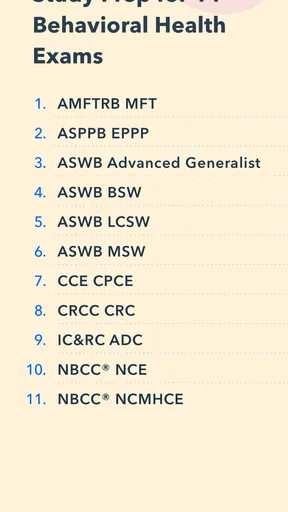
The app’s main value is making exam practice easier to fit into short gaps in the day. Its store summary describes practice questions and mock tests for 13 social work and counseling exams, so it is aimed at people preparing for specific professional assessments rather than anyone looking for broad behavioral health reading. The current version is 3.24.5, and it requires Android 8.0 or later.
Getting Started: A User-Friendly Interface
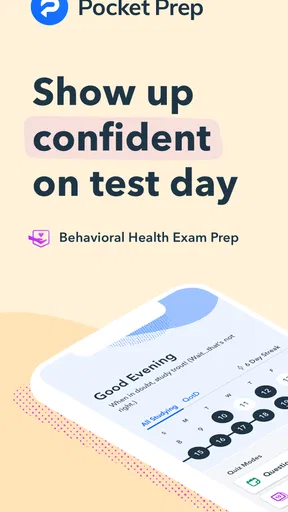
First things first, let’s talk about the app's interface. As soon as I opened Pocket Prep Behavioral Health, I was greeted with a clean, intuitive layout. There’s no need for a manual here; everything is self-explanatory. You get easy access to different sections like quizzes, study modes, and progress tracking. It’s smooth sailing from the get-go.
Customizing Your Study Sessions
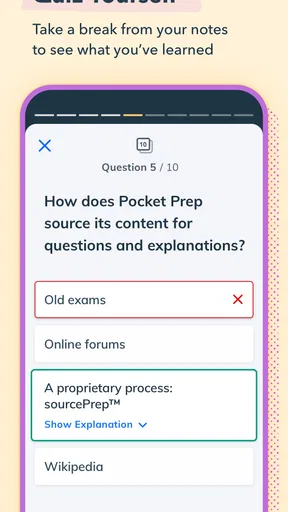
One of the coolest features I found is the ability to customize your quizzes. Whether you’re prepping for a specific exam or just brushing up on certain topics, you can tailor the questions to fit your needs. This flexibility means you’re not wasting time on areas you’re already confident in, which is a huge plus in my book.
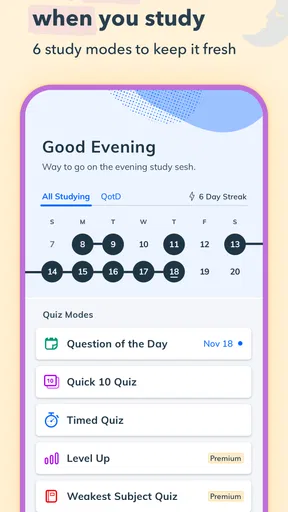
The app also offers various study modes. Feeling confident? Try the Timed Quiz mode. Need to take it slow? Opt for the Untimed mode. It’s like having a study buddy that adapts to your style.
Worth Reading Before You Choose

Flipboard Shows What News Apps Must Do Beyond the Feed

Switching to Android Auto Means Rethinking Your Driving Routine

Google Calendar Makes a Crowded Week Easier to Manage

Ludo King Makes the Most of the Minutes Between Plans

Baby Panda World Brings Quick Play to Modern Phones, but Its Game Library Feels Busy

ESPN’s Live Game View Makes Following Close Games Easier
Using quiz settings with a purpose
Customization is most helpful when you use it to answer a precise question about your preparation. If a topic keeps tripping you up, build a session around that area rather than repeatedly taking broad quizzes and hoping the weak point appears. Once you feel steadier, switch back to a wider mix. That gives you a practical check on whether you can recognize the material when it is no longer grouped by topic.
I’d also alternate the timed and untimed modes instead of choosing one permanently. Untimed practice gives you room to read carefully and learn from explanations; a timed session can reveal whether you can retrieve that knowledge under pressure. A strong result in one mode does not guarantee the same performance in the other, so treating them as complementary checks is more useful than treating a score as a verdict.
Content Quality: Comprehensive and Up-to-Date
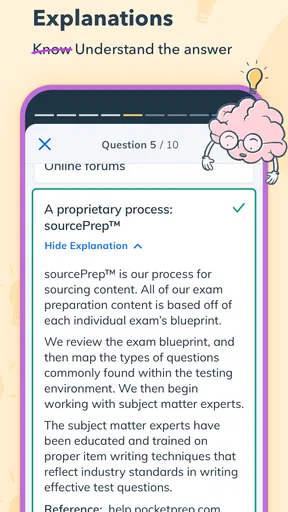
Now, let’s talk content. The app boasts a wide range of questions written by industry experts. I found the questions to be challenging yet fair, covering a broad spectrum of topics within behavioral health. The explanations provided after each question are thorough, helping to solidify your understanding.
What’s more, the app regularly updates its content to align with current standards and practices in the field. This ensures you’re getting the most relevant information. It’s like having a front-row seat to the latest in behavioral health education.
Make explanations do more than confirm an answer
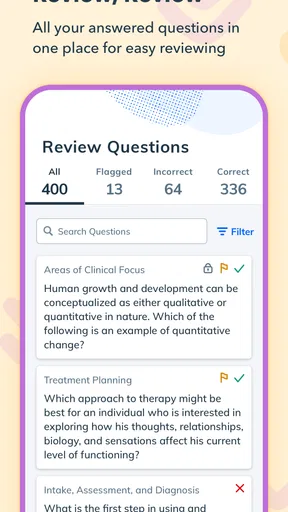
A useful way to work through a missed question is to pause before moving on and state, in your own words, why the correct choice fits and why your choice did not. That extra step helps separate a content gap from a rushed reading or a misinterpretation of the prompt. If you guessed correctly, the explanation still deserves a look: a lucky answer can hide a shaky understanding just as easily as a wrong answer exposes one.
I would keep a short list outside the quiz of concepts that repeatedly cause uncertainty. The app’s progress information can point toward areas to revisit, but a simple note about what confused you gives each later session a clear purpose. This is especially handy when you have only a few minutes: review one recurring issue rather than opening a quiz without a plan.
Where practice questions help—and where they don’t
For exam preparation, question practice is valuable because it makes you retrieve information instead of only rereading it. The trade-off is that a question bank is not the same thing as a complete course. If you are new to a topic, or need a careful explanation of a broader framework before testing yourself, pair the app with your course materials or a trusted textbook. I would not use short quizzes as my only source for learning professional concepts.
It is also worth checking that you select the exam relevant to your own plans. Social work and counseling assessments can have different scopes, even when they share some subject matter. A broad behavioral health interest alone is not enough reason to assume every question set will match your target. The app makes most sense when you can name the exam you are preparing for and use practice to locate what still needs work.
A realistic day with the app
Imagine you have a break between classes or a quiet stretch on the commute, but not enough time to unpack a textbook. You could use that window for a short, focused quiz, then read the explanations for any answer that felt uncertain. Later, when you have a longer study block, return to the topics that caused trouble and use a timed session to see whether your recall holds up. This makes the app a useful companion to a study plan, rather than a substitute for one.
That routine also avoids a common trap: treating the number of questions completed as proof of progress. A quick run through familiar material can feel productive while leaving weak areas untouched. I’d judge a session by what you learned from it and what you plan to revisit, not just by how many answers you tapped.
Tracking Your Progress
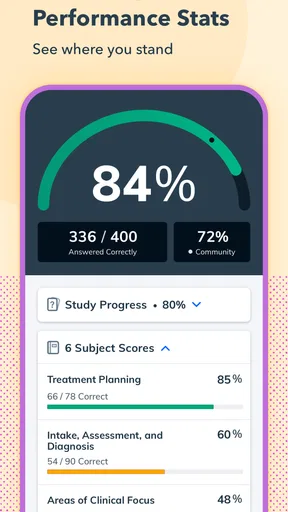
I’m a big fan of data, and this app doesn’t disappoint. The progress tracking feature allows you to see how you’re doing over time. You get detailed stats on your strengths and areas for improvement, which I found incredibly motivating. It’s satisfying to see those numbers improve after each session.
The app also provides a daily study goal feature to keep you on track. It’s a gentle nudge to remind you to keep up with your study regimen. Trust me, it’s a lifesaver during those busy weeks.
Read the trend, not just the score
Progress tracking is most useful when you look for patterns across sessions rather than reacting to one unusually good or bad result. If one area remains difficult, that is a cue to adjust your study plan, not a reason to grind through the same quiz repeatedly. Likewise, improving scores on familiar questions may reflect recall of the questions themselves, so I’d occasionally use a broader session to test whether the understanding transfers.
The daily goal can support consistency, but it should serve your schedule rather than become another source of guilt. On a crowded day, a focused review may be more realistic than forcing a long session. For an exam with a fixed date, I’d use the goal as a gentle routine prompt and reserve longer blocks for deeper reading and review.
How it compares with other study choices
Compared with a textbook, lecture notes, or a structured course, Pocket Prep is more convenient for active recall and quick practice, but less suited to building a subject from the ground up. Compared with generic flashcards, its exam-oriented quizzes and mock-test framing are a closer fit for someone who wants to rehearse assessment-style decisions. Flashcards can still be better for memorizing a defined set of terms, while course materials are stronger when you need a connected explanation of why concepts fit together.
I’d choose this app when I already have a foundation and want regular question practice, targeted review, or a way to notice weak areas. I’d choose a fuller course or textbook first if I needed a guided curriculum, detailed teaching, or a broader introduction to behavioral health. The best option depends less on which tool looks most convenient and more on whether your current problem is recall, understanding, or exam pacing.
Community and Support
While studying can often feel like a solitary endeavor, Pocket Prep Behavioral Health adds a communal aspect. The app has a supportive community where you can share your experiences and tips with fellow users. It’s a great way to stay connected and motivated.
Plus, if you ever hit a snag, customer support is just a tap away. The team is responsive and eager to help, which adds an extra layer of reassurance.
Who is likely to get the most from it?
I think it is a good fit for a student or working professional who has chosen a relevant social work or counseling exam and wants practice that can be divided into manageable sessions. It may also suit someone returning to study after a break, because answering questions can quickly show which subjects feel familiar and which need deliberate review. The age rating is Everyone, but the app’s practical purpose is exam preparation, not a general activity for every age group.
I’d skip it as a primary resource if you have not yet learned the material, if your exam is outside the assessments it serves, or if you prefer long lessons and guided teaching over quizzes. It may also be a poor match if you want a broad behavioral health encyclopedia rather than exam-focused practice. In those cases, start with the study resource that addresses your actual gap, then consider question practice once you have enough grounding to benefit from it.
Deciding whether a paid option is worthwhile
The free download lowers the barrier to trying the app, but the paid items mean that “free” should not be read as a promise that every preparation need can be met at no cost. Before buying, I’d compare the available option with your target exam, the time you have left, and the other resources you already own. If the questions help you find and fix weak areas, a purchase may be easier to justify; if you mainly need explanations or foundational teaching, spending on a more suitable resource could be better value.
I would not buy simply because an exam is approaching. First try a representative session, see whether the question format feels relevant, and check whether reviewing explanations changes what you understand. That quick evaluation gives you a more grounded basis for deciding than pressure or optimism alone.
Final Thoughts: A Reliable Study Companion
All in all, Pocket Prep Behavioral Health is a robust tool for anyone serious about mastering the field. It’s comprehensive, user-friendly, and adaptable. Whether you’re cramming for an exam or just keeping your skills sharp, this app has got you covered.
So, if you’re looking for a trusty sidekick to help you navigate the world of behavioral health, give this app a try. It might just be the boost you need to ace your next challenge!
My verdict is to try it if you are preparing for one of the social work or counseling exams it covers and want a portable way to practise, especially if you can make use of the targeted sessions and explanations. I’d keep textbooks, classes, or other structured material in the mix for deeper learning, and I’d decide on a paid option only after testing whether the practice suits your needs. For the right learner, it can make study time more focused; for someone seeking a complete course or unrelated exam preparation, I’d look elsewhere first.
Pros
- Comprehensive question database.
- Customizable study sessions.
- User-friendly interface design.
- Detailed explanations for answers.
- Offline access available.
Cons
- Limited free content.
- Occasional app crashes.
- Some questions feel repetitive.
- Requires account for full features.
- In-app purchases can be pricey.
FAQs for Pocket Prep Behavioral Health
What types of exams does Pocket Prep Behavioral Health cover?
Pocket Prep Behavioral Health provides preparation materials for a variety of exams within the behavioral health field, including the National Counselor Examination (NCE), the Board Certified Behavior Analyst (BCBA) exam, and other related certifications. Each exam package includes practice questions, detailed explanations, and study modes to cater to different learning styles.
How does Pocket Prep Behavioral Health enhance my study process?
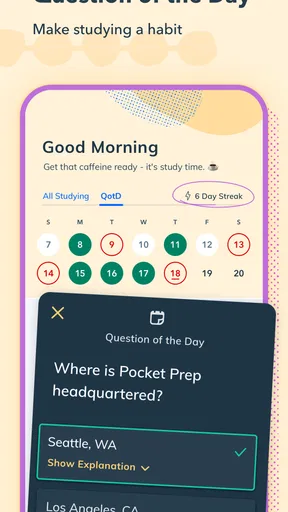
The app offers a personalized study experience by allowing users to customize practice tests based on specific subjects or difficulty levels. It features a Question of the Day, timed quizzes, and detailed performance analytics. These tools help users identify strengths and weaknesses, making the study process more efficient and targeted.
Is Pocket Prep Behavioral Health available offline?
Yes, Pocket Prep Behavioral Health can be used offline. Once the app and the exam content have been downloaded, users can access practice questions and study materials without an internet connection. This feature is particularly useful for studying on the go or in areas with limited connectivity.
Does Pocket Prep Behavioral Health offer customer support?
Yes, Pocket Prep Behavioral Health provides customer support through multiple channels. Users can access FAQs, contact support via email, or use the in-app messaging feature for prompt assistance. The support team is known for its responsiveness and helpfulness in resolving issues and answering queries.
Are there any subscription fees for using Pocket Prep Behavioral Health?
Pocket Prep Behavioral Health operates on a subscription model with various pricing plans, including monthly and yearly options. While some basic features might be available for free, full access to all exam content and advanced features requires a subscription. Users should review the pricing details in the app store before committing to a plan.


